


Black literature and the increased visibility of museum exhibitions such as the Met’s “Harlem Renaissance and Transatlantic Modernism” or the Whitney’s “Edges of Ailey” are highlighting more art from the African diaspora. The Met’s newest exhibition, “Superfine: Tailoring Black Style,” provides another insightful experience through the history of dandyism. The costumes, clothing, and other items on display essentially correlate to the design of the exhibition itself. The show presents 12 sections of architecture complemented by 12 aspects of dandy style. The large architecture creation was also meant to represent freedom.
Artists Tanda Francis and Torkwase Dyson are responsible for the mannequins and exhibition architecture, respectively. The two artists accurately captured the dandyism atmosphere via their mannequins and sculptural designs. The show’s composition includes well-dressed mannequins placed where visitors must look up, with many of the works displayed as if on a pedestal, encouraging viewers to view Black and African diasporic style with awe and admiration.
“Superfine: Tailoring Black Style” is based on the book “Slaves to Fashion: Black Dandyism and the Styling of Black Diasporic Identity,” published in 2009 and written by Monica L. Miller, Columbia University’s and Barnard College’s chair of Africana Studies and acclaimed scholar.
Andrea Dawson photos
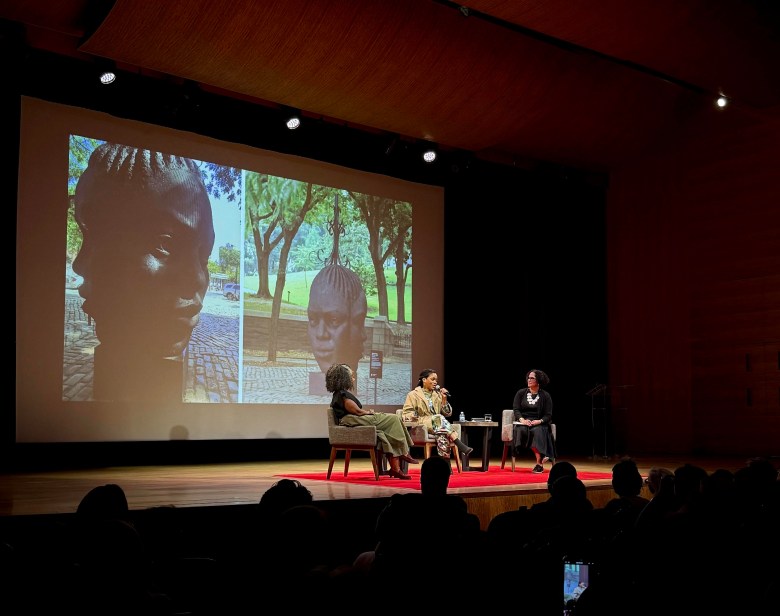
(L-R): Artists Torkwase Dyson, Tanda Francis, and author and guest curator Monica L. Miller. 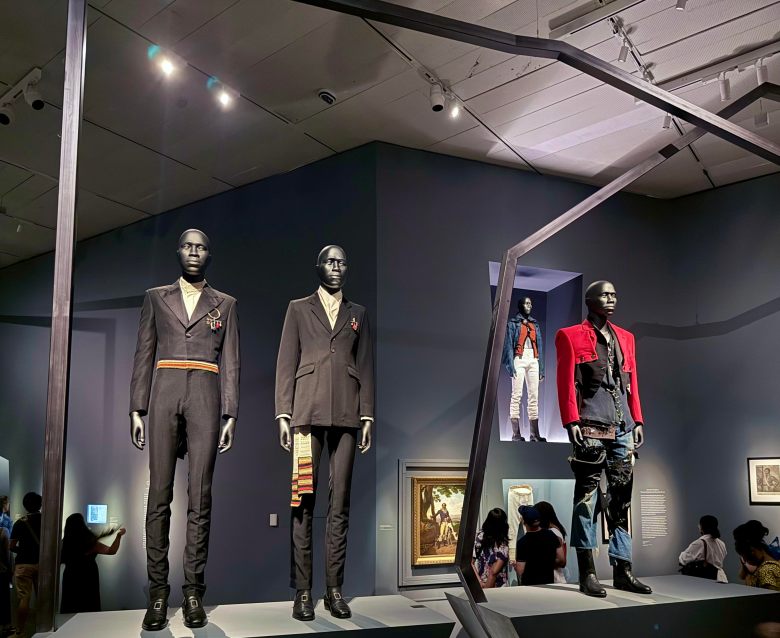
Mannequins made by artist Tanda Francis on display for “Superfine: Tailoring Black Style” exhibition. 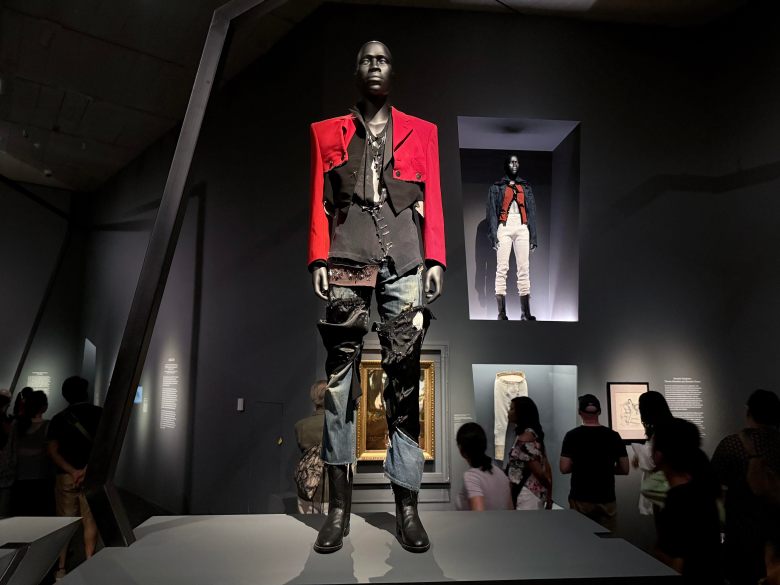
Mannequins made by artist Tanda Francis on display for “Superfine: Tailoring Black Style” exhibition. 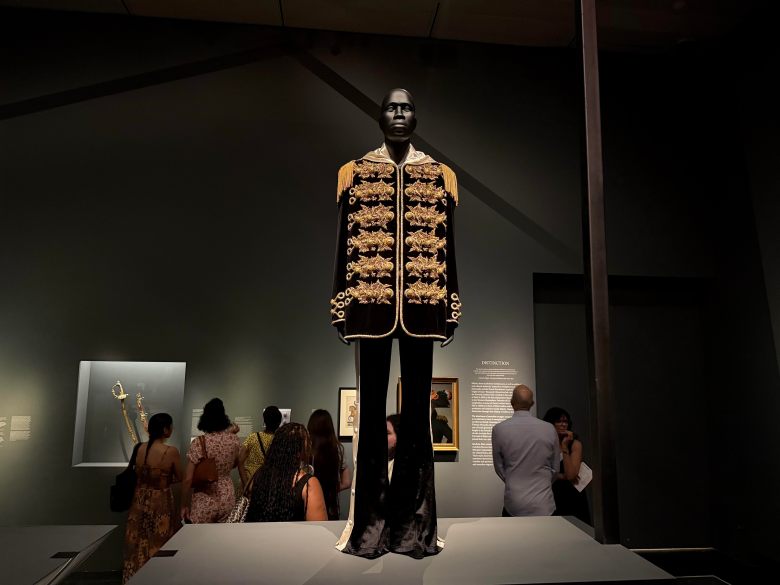
Gold-and-black dressed mannequin at “Superfine: Tailoring Black Style” exhibition. 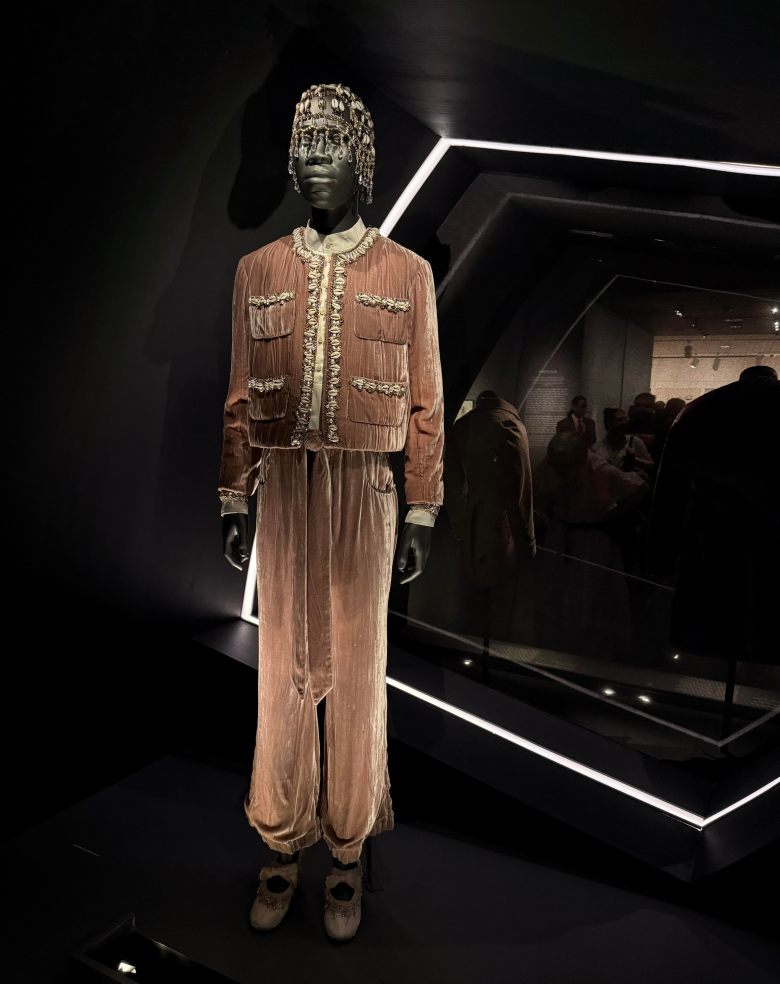
Met’s exhibition, “Superfine: Tailoring Black Style” piece Grace Wales Bonner’s “Aime” ensemble on display featuring elevated structures made by artist Torkwase Dyson. 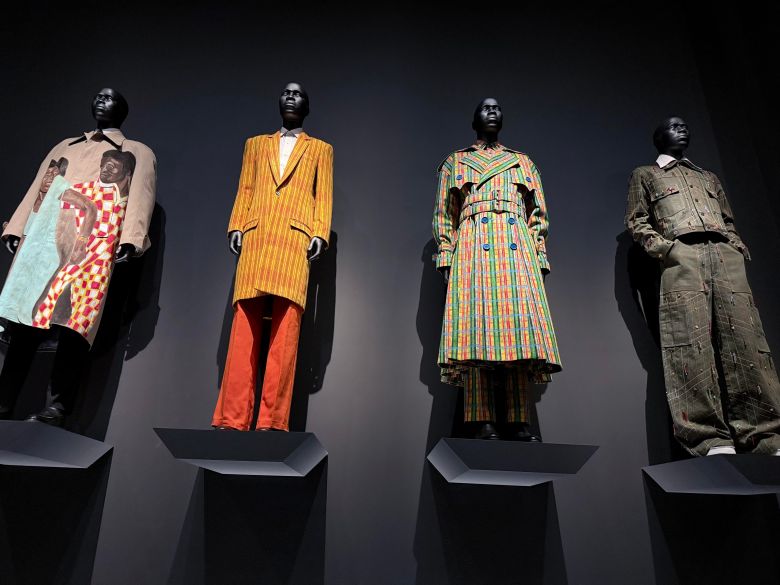
Mannequins made by artist Tanda Francis on display for “Superfine: Tailoring Black Style” exhibition. 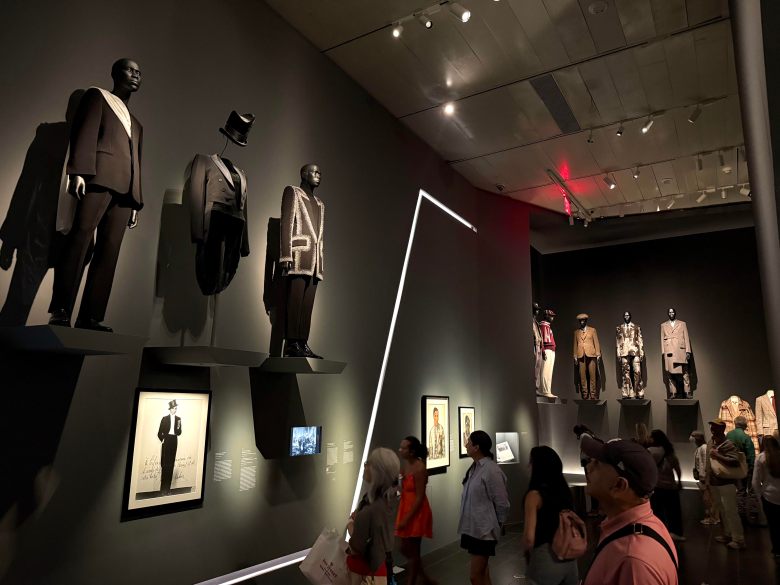
Pic 1 – Visitors explore “Superfine: Tailoring Black Style” exhibition at the Met. Credit: Andrea Dawson photo
“The exhibition interprets the concept of dandyism as both an aesthetic and a strategy that allowed for new social and political possibilities,” said Miller. During a recent Artist Talk at the Met about the new installment, the guest curator said she began her research on dandyism more than 30 years ago as a graduate student and revealed that the translation of her book into an exhibition was well-prepared. She described Black people demonstrating their right to self-presentation through dandyism as “a mode of distinction and resistance within a society impacted by race, gender, class, and sexuality.”
“I do African faces in public spaces,” said Tanda Francis. As the show’s mannequin designer, she made sure the mannequins featured African faces. Francis referred to working with Miller as a “great collaboration.” “Mannequins idealize beauty — it’s meant to be a beautiful person,” said Francis during the artist talk. The evolution of dandyism, inspired by Black style and mannerisms from the exhibition, is directly related to Black literature. Zora Neale Hurston’s 1934 essay, “Characteristics of Negro Expression,” was used as inspiration for “Superfine.” “Whatever the Negro does of his own volition, he embellishes,” Hurston wrote.
The other well-tailored clothing complemented the purposely gray mannequins. The exhibition’s design color mimicked a theme of toned-down, dark colors, according to Torkwase Dyson. During the Met artist talk, Dyson discussed how Miller’s book inspired her exhibition design. “Something so beautifully written about in the show is how Black people [were] liberate[d] from the Caribbean, from Virginia, to New York,” said Dyson. “I wanted to make sure that the work I did, the geometry that [came] from the book, expressed that expanse.”
Francis recognized Dyson’s challenge in designing elevated structures. “It’s probably hard to photograph, but they are great to be in the presence of,” she said. One visitor enjoyed viewing the works, including the African details of the mannequins’ faces, as a “godly” experience.
“Outside of symbolism and representation, there was a godliness and ancestral gauge,” said Joseph V. Moore Jr. The vegan chef and community organizer described the exhibition as a “train vision” that flowed as visitors walked through. He added that the show’s music was spot on and being there felt “cinematic.”
“It was so timely to think about how to create what I consider sort of a force multiplier as exhibition designs go,” said Dyson. She believed it was her and the team’s job to make a space that accurately conveyed Miller’s text from her research and book. “I felt like the lighting designers were visionaries. I felt that I had worked at my capacity in [relation] to time and space.” Dyson believes her design for the show was taken to another level by the Met, yet it wasn’t institutionalized.
“Superfine: Tailoring Black Style” will be at the Met until October 2025. For more info, visit metmuseum.org.